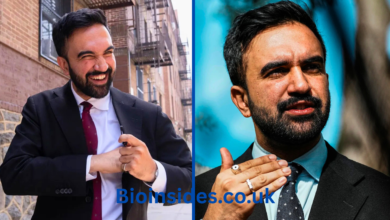
Peter Tuchman Net Worth: The Surprising Truth Behind Wall Street’s Most Famous Face


Have you ever opened a financial news article and seen a wild-haired man on the trading floor, eyes wide, face telling the entire story of the market? That face belongs to Peter Tuchman. And if you have spent any time following Wall Street, you already know exactly who he is.
Peter Tuchman net worth is one of the most searched financial curiosities online, and for good reason. This man has spent over four decades on the floor of the New York Stock Exchange. He has traded through Black Monday, the dot-com crash, the 2008 financial crisis, and the COVID collapse. He did not just survive all of it. He thrived. So how much has that actually translated into real wealth? The answer is more nuanced than you might expect, and the story behind it is honestly worth reading. This article covers his career journey, his income sources, his investment philosophy, and what his story can teach you about building lasting financial success.
Who Is Peter Tuchman? A Quick Background
Peter Michael Tuchman was born on December 24, 1957, and has spent his career as a stock trader on the floor of the New York Stock Exchange. He is known as the “Einstein of Wall Street” partly because of his hairstyle, and has also been called the “most photographed trader on Wall Street,” typically appearing in reaction shots during particularly volatile trading days.
His roots are deeply human and deeply American. Tuchman grew up on the Upper West Side of New York City. His mother, Shoshana Itzkovich, was born in Hungary, and his father, Marcel Tuchman, was born in Poland. His parents met in a displaced persons camp after World War II and immigrated to the United States in 1949. That background, built on resilience and rebuilding, clearly left an impression on Peter.
Before Wall Street even entered the picture, Peter owned a record store and worked in Africa as an accountant for a Norwegian oil company. That path was anything but linear. But eventually, the NYSE called and he answered.
How Peter Tuchman Got His Start on Wall Street
Peter got a job as a clerk on the floor of the New York Stock Exchange in 1985. It did not take long for him to become a broker, launching a Wall Street career that took him from the crash of 1987, through the boom of the 1990s, and well beyond.
Think about that for a moment. This man walked onto the NYSE floor as a basic clerk. He was not handed a seat or a book of clients. He built it from scratch, trade by trade, day by day. Tuchman started in 1985 as a teletypist and clerk, a ground-level role that gave him a front-row seat to how markets actually move.
That perspective turned out to be one of his biggest advantages. He understood market mechanics the way only someone who had watched them from the bottom up really could.
The Crash That Defined Him
The Black Monday crash of October 1987 happened just two years into his career. Markets dropped by more than 22% in a single day. It was the kind of event that ends careers before they begin. For Tuchman, it became a crucible. He stayed. He adapted. And that decision to push through, rather than walk away, shaped the next four decades of his professional life.
His dramatic expressions were often captured by cameras, turning him into the “most photographed trader on Wall Street.” His face became particularly iconic during the 2008 financial crisis, when images of his stressed and shocked reactions went viral, symbolizing the global panic of that era.
Peter Tuchman Net Worth: What the Estimates Say
Here is where things get interesting. Peter Tuchman’s net worth is generally estimated to be somewhere in the range of $5 million to $25 million. This wide range reflects both the variability of a trader’s income year to year and the fact that much of his wealth is likely tied up in diversified investments rather than solely in cash.
The most frequently cited figure across financial biography sites sits around $20 million. The $20 million figure appears most frequently across financial biography sites and industry observer assessments, making it the most reasonable working estimate for his accumulated net worth.
Why the wide range? Because trading wealth is not like a salary. It fluctuates. A great year in a bull market can deliver exceptional returns. A volatile or bearish year compresses commissions and profits. Moderate trading success over a 30-plus year career, combined with intelligent investing in stocks, real estate, and retirement vehicles, makes that range plausible.
What you should take away from this is simple. Peter Tuchman did not build his wealth through one big windfall. He built it the old-fashioned way: steadily, consistently, over a very long time.
How Does Peter Tuchman Actually Make His Money?
This is the question most people really want answered. His income does not come from a single source. It never has.
Trading Commissions and Floor Brokerage
The core of Tuchman’s income has always been his work on the NYSE floor. He joined Quattro Securities in 2011 and continued to trade high-volume stocks, handling hundreds of millions of dollars on some days. Senior floor brokers at firms like Quattro earn through commissions on the volume they execute. When you are handling hundreds of millions in daily trades, those commissions add up fast.
His income sources include NYSE floor brokerage commissions from executing high-volume institutional trades, salary and performance fees from Quattro Securities and affiliated firms, and financial media appearances and paid commentary roles.
The Wall Street Global Training Academy
One of Tuchman’s smartest career pivots has been into financial education. Apart from his trading career, Peter Tuchman is the founder of the Wall Street Global Training Academy, where he shares his knowledge and experience with aspiring traders and financial professionals.
After seeing an incredible movement towards the democratization of trading and investing throughout the world, due to the pandemic, new trading apps, and barriers of entry coming down and allowing more people into the markets, he and his longtime colleague wanted to use their deep knowledge and expertise to help traders find repeatable success.
The Academy offers courses, bootcamps, and live weekly mentorship sessions. It is not just about stocks either. Their deep level of knowledge spans all types of trading. This education platform adds both a recurring revenue stream and a legacy dimension to his career.
Media Appearances and Podcasting
Tuchman is also the co-host of The Money Signal: From Main Street to Wall Street, a finance and markets podcast produced by GLORION MEDIA alongside consumer intelligence entrepreneur Tsvetta Kaleynska. The program focuses on market psychology, consumer sentiment, and trading insights from the perspective of a floor trader at the New York Stock Exchange.
He has been a familiar face on CNBC, Fox Business, and The Wall Street Journal. These appearances do not just build brand recognition. They translate into speaking fees and broader commercial opportunities over time.
Investments Built Over Four Decades
Beyond his prowess on the trading floor, Peter Tuchman’s financial portfolio encompasses a range of assets including residential properties, luxury vehicles, and investments in diverse financial instruments.
When you spend your entire career immersed in markets, you also develop a very clear sense of where to put your own money. Tuchman has had forty years of market cycles to refine his personal investment strategy.
Peter Tuchman’s Investment Philosophy
If you follow Tuchman on social media or have watched any of his interviews, you will notice a few recurring themes. He does not believe in trying to time the market. He believes in understanding it.
Tuchman emphasizes the importance of understanding market trends and the global economic landscape. His philosophy revolves around careful analysis of market data, timely decision-making, and risk management, which have been pivotal in his success as a trader.
His most quoted piece of advice is telling: “Buy stocks, not stuff.” It is a philosophy centered on building equity over time rather than spending on depreciating consumer goods. Straightforward advice. But most people still do not follow it.
Peter Tuchman’s legacy is marked by his emphasis on strategic diversification, disciplined risk management, and emotional resilience. Those three principles sound simple. But walk into the middle of a 2008-style market collapse and see how easy they are to actually live by.
Emotional Resilience as a Financial Tool
One of the most underrated parts of Tuchman’s success is his emotional intelligence. His famous expressions on the trading floor are not performances. They are real. And yet he has always maintained composure when it truly mattered.
Tuchman’s ability to navigate the volatile seas of the market with composure and grace underscores the importance of emotional resilience in the pursuit of financial success.
The traders who blow up are usually the ones who either feel nothing and take reckless risks, or feel too much and panic at exactly the wrong moment. Tuchman learned how to sit in the discomfort of uncertainty without making impulsive decisions. That skill alone is worth millions.
The Man Behind the Photographs
There is more to Peter Tuchman than the trading floor. Tuchman was married to Lise Zumwalt Tuchman, a filmmaker and producer, until her death in 2023. That loss was profound and public. The financial world, for all its noise, is still made up of human beings navigating real life alongside their careers.
Today, Tuchman’s son, Benny, works closely alongside him on the floor of the New York Stock Exchange. For Peter, Wall Street is home. He has said: “I knew immediately it was my calling. I thrive on volatility, market action, headlines, and news. I loved the adrenaline and craziness of the place.”
There is something genuinely moving about a father and son standing on the same trading floor. It speaks to a kind of legacy that goes beyond net worth.
His brother, Jeffrey Tuchman, is an award-winning documentary filmmaker known for addressing complex social issues. The Tuchman family clearly has a deep intellectual and creative fabric running through it.
What Makes Peter Tuchman Uniquely Wealthy in a Non-Financial Sense
Here is a perspective shift worth considering. When you look at Peter Tuchman’s net worth, the dollar figure matters far less than the story behind it. He built his wealth without a hedge fund, without a family fortune to inherit, and without a flashy IPO. He did it through presence, consistency, and the willingness to show up every single day for forty years.
Peter Tuchman has been covering institutional trading, hedge funds, convertible arbitrage, and retail markets for more than 35 years. That breadth of experience is genuinely rare. Most people in finance specialize narrowly. Tuchman understands the full ecosystem.
He also understood, earlier than most, that the floor trader of the future would need to be more than just a trader. He would need to be a brand, an educator, and a communicator. He became all three.
Lessons You Can Take from Peter Tuchman’s Financial Journey
You do not need to work on the NYSE floor to take something useful from how Tuchman built his wealth. A few lessons stand out clearly.
Start from the bottom and learn everything. Tuchman began as a teletypist and clerk. He did not skip steps. That foundation made everything else possible.
Diversify your income streams early. Trading commissions alone would not have built his estimated $20 million net worth. The education platform, media work, and personal investments all contributed over time.
Survive the crashes. Every major market downturn in the last forty years happened on Tuchman’s watch. He did not cash out. He adapted. Staying in the game through volatility is one of the most underrated wealth-building strategies there is.
Turn your expertise into a product. The Wall Street Global Training Academy is proof that knowledge itself has commercial value. Whatever field you are in, your accumulated expertise can become a revenue stream beyond your primary job.
Buy stocks, not stuff. This advice is simple enough to tattoo on your wrist. Most wealth destruction happens through lifestyle spending, not bad investments.
Conclusion
Peter Tuchman net worth, estimated between $5 million and $25 million with the most cited figure around $20 million, reflects something rare in modern finance: a career built entirely on merit, resilience, and the courage to show up through every kind of market imaginable. He is not a hedge fund billionaire. He is something arguably more interesting: a floor trader who turned his personality, expertise, and decades of hard-won knowledge into a multimillion-dollar legacy.
What is remarkable is not just the wealth. It is the longevity. Anyone can have a great year in the market. Very few people can string together forty great decades. And even fewer can do it while becoming a global symbol of what it actually feels like to trade for a living.
If you found his story interesting, share it with someone who thinks Wall Street is all suits and spreadsheets. Peter Tuchman is proof that it is also very, very human. What part of his journey resonated most with you?
FAQs About Peter Tuchman Net Worth
What is Peter Tuchman’s net worth in 2025? Peter Tuchman’s net worth is estimated between $5 million and $25 million. The most commonly cited figure across financial sources is approximately $20 million, built through four decades of trading, media work, and his financial education platform.
How did Peter Tuchman make his money? His wealth comes from multiple sources: trading commissions as a senior NYSE floor broker, performance fees from Quattro Securities, media appearances on networks like CNBC and Fox Business, online trading courses through the Wall Street Global Training Academy, and a personal investment portfolio built over 40 years.
Why is Peter Tuchman called the Einstein of Wall Street? The nickname comes from his wild gray hair and expressive personality, which reminded traders and media of Albert Einstein’s iconic appearance. His deep market knowledge only reinforced the comparison.
Is Peter Tuchman still trading? Yes. As of 2026, Peter Tuchman remains an active trader on the NYSE floor, working with Quattro Securities. His son Benjamin also works alongside him on the trading floor.
What is the Wall Street Global Training Academy? It is a trading education platform co-founded by Peter Tuchman that offers bootcamps, online courses, and live mentorship for aspiring traders. It covers stock trading as well as other asset classes including futures.
What is Peter Tuchman’s annual salary? While his exact salary is not publicly disclosed, industry estimates suggest his annual earnings from trading and affiliated activities likely exceed $2 million in strong market years, though this fluctuates significantly with market conditions.
Did Peter Tuchman earn money from his famous photographs? This has been a topic of discussion, but there is no confirmed public record that Tuchman receives direct payment for editorial photographs taken of him on the trading floor. His media value, however, has contributed indirectly to his brand and business opportunities.
Where did Peter Tuchman grow up? He grew up on the Upper West Side of New York City. His parents were Holocaust survivors who immigrated to the United States from Europe in 1949.
What is Peter Tuchman’s most famous financial advice? His most quoted piece of advice is “Buy stocks, not stuff,” which encourages long-term equity investing over consumer spending on depreciating goods.
Who is Peter Tuchman’s family? He was married to filmmaker Lise Zumwalt Tuchman until her passing in 2023. He has two children, Benjamin and Lucy. His son Benjamin now works with him on the NYSE trading floor. His brother Jeffrey Tuchman is an award-winning documentary filmmaker.