Peter Cardwell: The Unflinching Voice of Modern British Political Broadcasting

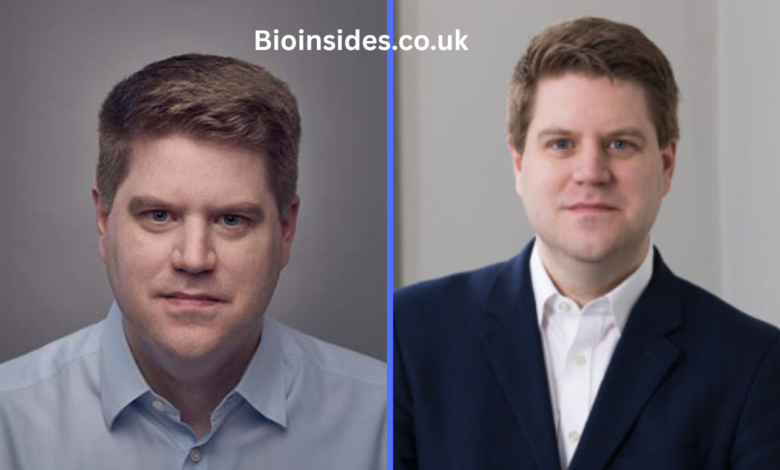
Table of Contents
ToggleIntroduction
In an age where political commentary often feels either hysterically partisan or painfully sanitised, Peter Cardwell has carved out a rare space for himself: the straight-talking, quick-witted broadcaster who can make you laugh, think, and occasionally wince—all before your morning coffee gets cold. Whether he’s holding a government minister’s feet to the fire on GB News or sharing a cheeky aside on social media, Cardwell brings a blend of insider knowledge and everyman relatability that feels increasingly scarce. But behind the polished on-air persona lies a remarkable story: a working-class kid from Merseyside who talked his way into the corridors of Westminster power, survived the brutal circus of Downing Street spin, and emerged not as a cynical operator, but as one of the most refreshingly honest voices on British television today. How did a former local newspaper reporter end up debating Brexit, Boris Johnson, and the future of the Conservative Party on national screens? Let’s rewind the tape.
Quick Facts About Peter Cardwell
| Category | Details |
|---|---|
| Full Name | Peter Cardwell |
| Age | Born 1979 (around 45–46 years old as of 2026) |
| Profession | Television & Radio Presenter, Political Journalist, Former Government Special Adviser |
| Parents | Mother: A dedicated nurse; Father: A local trade union official (names not publicly disclosed) |
| Siblings | One younger sister (private individual) |
| Birthplace | Birkenhead, Merseyside, England |
| Net Worth | Estimated £500,000 – £750,000 (approx. $630,000 – $950,000 USD) |
| @petercardwell (active, behind-the-scenes and political humour) | |
| Twitter (X) | @petercardwell (lively daily political commentary) |
| Peter Cardwell (professional history, speaking engagements) |
Early Life and Formative Years on Merseyside
Long before the studio lights and autocues, Peter Cardwell was just a curious boy growing up in Birkenhead, a town on the Wirral Peninsula that stares across the River Mersey at the glittering towers of Liverpool. It was a place defined by hard graft, community spirit, and the kind of no-nonsense attitude that sticks with you for life. His mother worked long shifts as a nurse, while his father was a trade union official—a household where politics wasn’t just a dinner table debate, but a lived reality. Cardwell has often joked that he learned to argue before he learned to tie his shoelaces, and there’s probably some truth to it. The clash of industrial decline, Thatcher-era policies, and the rise of New Labour shaped his childhood worldview, giving him an early understanding that politics isn’t an abstract game for pundits—it affects whether your neighbour keeps their job or whether the local factory stays open.
School wasn’t always easy for young Peter. He wasn’t the loudest kid in the room, but he was observant, and he had a natural instinct for language. While other boys dreamed of being footballers or firefighters, Cardwell found himself oddly fascinated by the news. He’d watch the lunchtime bulletins with his mum and read his dad’s newspapers cover to cover, baffling his mates. That early exposure planted a seed: he wanted to be where stories broke, where decisions were made, and where someone could speak truth to power. After finishing secondary education on Merseyside, he went on to study at the University of Leeds, where he read Politics and Parliamentary Studies—a choice that felt less like an academic pursuit and more like a calling. University gave him the theoretical framework, but the real education was still to come.
Family, Values, and the Spark of Ambition
You can’t truly understand Peter Cardwell without understanding the quiet strength of his family. His mother’s nursing career taught him empathy, resilience, and the importance of showing up—even when it’s hard. His father’s role in the trade union movement gave him an insider’s view of collective bargaining, worker rights, and the messy, beautiful mechanics of grassroots politics. It was a home where fairness wasn’t a slogan; it was a daily practice. Cardwell has spoken in interviews about how his parents never pushed him toward a specific career, but they did push him toward curiosity. “Read everything. Question everyone. Be kind, but not a pushover,” seemed to be the unofficial family motto.
That upbringing shaped his values as a journalist and broadcaster. He doesn’t come from privilege, old money, or the London media aristocracy. He’s not the product of Eton or Oxbridge debating societies. Instead, he’s the product of a working-class home where you learned to make a point clearly because nobody had time for waffle. That groundedness is exactly what makes him so effective on screen today. When he challenges a politician, it doesn’t feel like a gotcha moment from a smug metropolitan elite. It feels like your sharp, fair-minded neighbour asking a question you’d want to ask yourself.
The Rocky Road into Journalism: Local Papers to Westminster
Every great broadcaster starts somewhere unglamorous, and for Peter Cardwell, that somewhere was the newsroom of a local newspaper—specifically the Birkenhead News and later the Liverpool Echo. These were the kind of jobs where you learned to write fast, check your facts twice, and never assume anything. He covered council meetings, school fetes, court cases, and the occasional human-interest story that reminded him why journalism matters. It was hard work, often poorly paid, and utterly addictive. Cardwell has described those days as his “real university”—a place where he learned that behind every policy is a person, and behind every press release is a story waiting to be told properly.
His talent for clear, punchy writing and his innate feel for political angles didn’t go unnoticed. Soon, he made the leap to national news, working for outlets like ITN and Channel 4 News, where he sharpened his skills as a producer and reporter. But it was his move into the bear pit of Westminster that truly defined his next chapter. He became a Special Adviser (or “SpAd”) for the Conservative Party—a role that thrust him into the heart of government during some of the most turbulent years in recent British political history. Working under Secretaries of State for Transport and for Northern Ireland, Cardwell learned the dark arts of media management: how to craft a message, defend the indefensible (occasionally), and survive the 24-hour news cycle with your sanity intact.
The Downing Street Years: Spin, Stress, and Strategy
Being a government special adviser is not for the faint of heart. You’re on call 24/7, you’re the buffer between ministers and a hungry press pack, and you’re expected to spin every setback into a stepping stone. Peter Cardwell thrived in this high-pressure environment—not because he was ruthless, but because he was honest. Colleagues from the time remember him as the guy who would tell a minister “no, that line won’t fly” before anyone else would dare. He understood the media because he’d been a journalist. He understood the public because he’d never forgotten his Merseyside roots. And he understood that trust, once broken, is almost impossible to rebuild.
His time in government included stints at the Department for Transport, the Northern Ireland Office, and Number 10 Downing Street itself. He worked under prime ministers David Cameron and Theresa May, witnessing the chaos of Brexit negotiations, the rise of populism, and the crumbling of traditional political loyalties. It was exhilarating and exhausting in equal measure. But after years inside the machine, Cardwell began to feel the itch to return to his first love: journalism. He wanted to ask the questions, not just dodge them. He wanted to be on the other side of the microphone.
GB News and the Birth of a Broadcasting Star
In 2021, a new challenger appeared in British television: GB News, the self-styled “people’s channel” that promised to shake up the stuffy, London-centric news establishment. Many laughed at the launch’s technical glitches and low-budget sets, but Peter Cardwell saw an opportunity. He joined as a presenter and political correspondent, bringing with him a rare combination of Westminster insider credibility and genuine warmth. His show, often late mornings or early afternoons, quickly became a sleeper hit. Unlike some of the channel’s more bombastic personalities, Cardwell didn’t yell. He didn’t sneer. He simply listened, challenged respectfully, and made complex politics digestible without dumbing it down.
What sets Cardwell apart on GB News is his ability to shift gears seamlessly. One minute he’s grilling a Labour shadow minister about fiscal policy; the next, he’s laughing with a caller about their cat’s funny name. He treats every guest—whether a Cabinet minister or a first-time voter from Doncaster—with the same baseline respect. That doesn’t mean he’s soft. On the contrary, his follow-up questions are surgical. But he never confuses aggression with authority. His style is more “clever schoolteacher” than “attack dog,” and viewers have responded in droves. Ratings for his slots have steadily grown, and he’s become one of the channel’s most trusted and versatile presenters, also appearing regularly on TalkTV and Times Radio.
Major Achievements and Defining Moments
Peter Cardwell’s career is studded with moments that showcase his range and integrity. One of his most memorable broadcasts came during the chaotic aftermath of Liz Truss’s mini-budget in 2022. While other commentators were either gloating or panicking, Cardwell calmly walked viewers through the economic mechanics of what had gone wrong, interviewed Treasury sources off the record, and managed to explain bond yields without putting anyone to sleep. It was a masterclass in serious broadcasting.
He’s also earned respect for his live election night coverage, where his encyclopedic knowledge of UK constituencies and voting patterns shines. Whether it’s a local by-election in rural Shropshire or a general election night that runs until dawn, Cardwell brings energy, accuracy, and a touch of dry humour. He’s been nominated for several industry awards, including Royal Television Society recognition for political reporting, though he’s characteristically modest about such things. “I just turn up and talk,” he jokes. “The real heroes are the producers making me look good.”
Net Worth and Income Sources: A Balanced Overview
Estimating the net worth of a broadcaster like Peter Cardwell requires a respectful and realistic look at UK media salaries. As of 2026, his net worth is estimated to be between £500,000 and £750,000 (approximately $630,000–$950,000 USD). That figure reflects his cumulative earnings from a career spanning print journalism, government advisory roles, and television presenting.
His primary income streams include:
-
GB News salary – As a regular on-air presenter and political correspondent, this forms the bulk of his annual earnings, likely in the range of £100,000–£150,000 per year.
-
Freelance contributions – Cardwell regularly appears on TalkTV, Times Radio, and BBC Radio 5 Live, earning appearance fees.
-
Public speaking and event hosting – He is in demand as a moderator for political conferences, corporate events, and charity galas, particularly in the North West.
-
Journalism and column writing – He has written opinion pieces for The Spectator, The i paper, and ConservativeHome, among others.
-
Social media and podcasting – While not a major earner, his online presence does attract small brand partnerships and Patreon-style supporter contributions.
It’s worth noting that Cardwell lives a comfortable but not flashy lifestyle. He has spoken in interviews about being careful with money—a habit learned from his working-class upbringing—and he rents a modest flat in London while keeping ties to the North West. He is not driven by wealth, but by the craft itself.
Personal Life, Daily Routines, and What Makes Him Tick
When the microphone clicks off and the studio lights dim, Peter Cardwell becomes something of a homebody. He is intensely private about his romantic relationships—rumoured to be single and focused on his career as of the latest updates—but he is open about his love for literature, classic cinema, and long walks. A self-confessed “recovering political junkie,” he tries to read one non-political book per week, often history or literary fiction, as a way to keep perspective. His other great love is football: he’s a passionate but long-suffering Everton FC supporter, a fact that has caused him no end of gentle ribbing from colleagues who support Liverpool or Manchester United.
A typical day for Cardwell starts early—around 5:30 AM. He reads three newspapers (print, not digital—he’s a traditionalist), listens to BBC Radio 4’s Today programme, and scans Twitter for the early mood music of the day. Then it’s into the GB News studio for pre-production meetings, guest briefings, and a quick coffee before going live. Afternoons are often spent recording interviews for the next day, writing opinion pieces, or heading to Westminster to speak to sources. He’s in bed by 10 PM, rarely breaking that rule unless there’s breaking news. “Sleep is underrated in my industry,” he says. “A tired broadcaster makes lazy mistakes.”
Social Media Presence: How Peter Cardwell Engages Online
If you want to see the unfiltered Peter Cardwell, head to Twitter (X) at @petercardwell. He posts multiple times a day—commenting on breaking political stories, sharing clips from his shows, and occasionally letting loose with a dry one-liner that cuts through the online noise. Unlike many broadcasters who use social media as a press release distribution service, Cardwell genuinely engages. He replies to followers, debates respectfully (most of the time), and isn’t afraid to admit when he’s wrong. His tone is consistent: sharp but never nasty, informed but never pompous.
On Instagram (@petercardwell), he offers a softer side: backstage photos from the studio, shots of his favourite Liverpool bookshops, and the occasional picture of a rainy London street that could pass for an indie film still. It’s not overly curated, which is exactly why it works. LinkedIn is reserved for more professional updates—speaking engagements, new show slots, and occasional long-form reflections on the state of political journalism. Across all platforms, his audience respects his authenticity. He doesn’t chase viral moments or manufactured outrage. He just… talks. And people listen.
Recent Updates and Future Goals
The last twelve months have been busy for Peter Cardwell. In late 2025, he launched a new Sunday morning political podcast titled “Cardwell’s Corner” —a weekly deep dive into one major political issue, featuring long-form interviews and listener Q&As. The podcast has already cracked the top 20 UK politics charts on Apple and Spotify, proving there’s appetite for thoughtful, un-hysterical political analysis. He’s also been tapped to host several live election debates for the next general election, a sign that his reputation as a fair and incisive moderator is growing.
Looking ahead, Cardwell has hinted at a possible book—a memoir-slash-guide to modern British politics aimed at young people who feel turned off by the current system. “I want to write something that doesn’t patronise,” he said in a recent radio interview. “Something that says: politics is messy, sometimes broken, but it’s also the only tool we have to change things. You can’t just switch off.” Whether the book materialises or not, what’s clear is that Cardwell is evolving. He’s no longer just a presenter or a former SpAd. He’s becoming a bridge between Westminster and the public—a role he wears with surprising grace.
Conclusion: A Legacy Built on Honesty and Grit
Peter Cardwell’s journey from a council house in Birkenhead to the bright lights of GB News is not a fairy tale. It’s a hard-won story of curiosity, resilience, and a refusal to become cynical in an industry that often rewards cynicism. He didn’t inherit connections or wealth. He earned every break through sheer persistence, sharp elbows when needed, and an almost old-fashioned belief that journalism should serve the public, not the powerful. In a media landscape drowning in hot takes and performative anger, Cardwell offers something radical: calm, informed, and decent conversation. He reminds us that you can be a conservative commentator without being cruel, and a former government insider without being a shill. As Peter Cardwell continues to pave the way for future generations of political broadcasters, his story stands as a reminder of how resilience and purpose can shape a meaningful legacy. The boy from Merseyside who loved the news grew up to become the kind of newsman the world needs more of: honest, human, and unafraid to ask the next question.