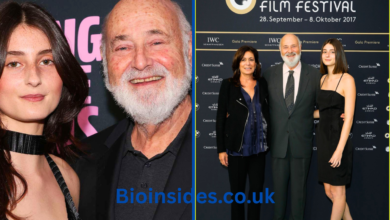
When you hear the last name “Frieda” in British creative circles, a certain image might flicker to mind—one of red carpets, iconic television moments, and a legacy of artistic rebellion. But Jordan Frieda, the son of two profoundly famous parents, has spent the better part of his adult life trying to write a different kind of headline. He isn’t looking for the flash of paparazzi cameras. Instead, he is more comfortable in the half-light of a recording studio, surrounded by analog synthesizers, guitar pedals, and the quiet hum of a track coming to life. For years, the public has been curious about the man behind the lineage, often wondering what it is like to grow up as the child of Absolutely Fabulous star Joanna Lumley and the legendary avant-garde musician Bob Geldof. Yet, Jordan has never leaned on that pedigree. Instead, he has carefully, almost stubbornly, built his own lane in the competitive world of music production, composition, and performance. This is the story of a man who could have taken the easy road of fame by association, but chose the harder, more rewarding path of artistic authenticity.
To understand Jordan Frieda, one must first separate the myth from the man. While his parents dominated tabloids and television screens, Jordan was quietly absorbing a different kind of education: one of rhythm, texture, and emotional storytelling through sound. His journey is not a tabloid drama; it is a slow, steady burn of creative evolution. From the bustling streets of London to the serene writing rooms of Nashville, Jordan has carved out a reputation as a versatile musician and producer who works with both rising stars and established names. He is the definition of a “musician’s musician”—respected by those in the industry, even if his face isn’t plastered on magazine covers. Let’s take a closer look at the man, his roots, his financial standing, and the quiet legacy he is building, one chord progression at a time.
Quick Facts About Jordan Frieda
| Attribute | Details |
|---|---|
| Full Name | Jordan Frieda |
| Age | Born in 1988 (Currently 36 years old as of 2026) |
| Profession | Musician, Record Producer, Songwriter, Composer |
| Famous Parents | Joanna Lumley (Mother) & Bob Geldof (Father) |
| Siblings | Fifi Trewellyan Geldof (Half-sister), Peaches Geldof (Deceased half-sister), Pixie Geldof (Half-sister), Tiger Lily Hutchence (Half-sister) |
| Birthplace | London, United Kingdom |
| Nationality | British |
| Net Worth | Estimated $1 Million – $3 Million USD |
| Primary Income | Music production royalties, live session work, composing fees |
| @jordanfrieda (Private/Selective) | |
| Twitter/X | Rarely active (Focus remains on music) |
| Not publicly listed (Prefers word-of-mouth industry networking) |
Early Life and the Unconventional Household
To say Jordan Frieda was born into an unconventional household would be an understatement of epic proportions. Arriving in London in 1988, he was immediately swept into a whirlwind of art, activism, and eccentricity. His mother, Joanna Lumley, was already a national treasure—beloved for her work in The New Avengers and soon to become an immortal icon as the champagne-swilling Patsy Stone in Absolutely Fabulous. His father, Bob Geldof, was not just a musician but a cultural revolutionary; the frontman of The Boomtown Rats and the mastermind behind Live Aid. For a young child, this environment was equal parts chaotic and magical. Imagine waking up to the sounds of a punk rock rehearsal in the basement, while your mother practiced flawless comic timing in the living room. That was Jordan’s normal.
Despite the glamour, the household was deeply rooted in activism and intellectual curiosity. Geldof was constantly traveling for humanitarian causes, while Lumley balanced acting with her own fierce advocacy for Gurkha rights. Growing up in this atmosphere taught Jordan early on that art and responsibility are not separate things—they are intertwined. He saw that music could move millions to action, and that performance could challenge social norms. However, the constant media attention on his parents’ high-profile relationship (and eventual separation) also taught him a valuable, painful lesson: privacy is precious. While his half-sisters, particularly Peaches and Pixie, often found themselves in the tabloids, Jordan took a different route. He retreated inward, finding solace in the very thing that brought his family together in the first place: music.
Education for Jordan was a mix of traditional schooling and the “university of life” that came with being a Geldof-Lumley. He attended reputable London schools, but his real education happened after hours. He would sneak into his father’s studio, fiddling with mixing boards and experimenting with drum machines. He wasn’t pushed to perform; rather, he was drawn to the process of creation. Where others saw fame, Jordan saw craftsmanship. This quiet, observational childhood shaped his personality—introspective, resilient, and deeply wary of the superficial trappings of celebrity. He learned that respect is earned, not inherited.
The Musical Awakening and Forging a Career Path
Unlike many nepo-babies who demand a record deal the day they turn eighteen, Jordan Frieda did the opposite: he vanished. After his parents’ split, he continued to live a relatively low-key life, focusing on mastering his instruments. He studied guitar, piano, and production, becoming a student of genres ranging from classic rock and blues to experimental electronic music. He understood that being Bob Geldof’s son might open a door, but it wouldn’t keep you in the room. The music had to stand on its own two feet.
His professional career began not as a frontman, but as a session musician and producer. This was a wise move. Working behind the glass, helping other artists shape their sound, allowed Jordan to learn the technical trade without the pressure of his last name being a distraction. He collaborated with a variety of indie British acts and singer-songwriters, slowly building a reputation as a “ghost in the room”—someone who could listen to a rough demo and instantly know what it needed: a bassline change, a different synth patch, or a complete structural overhaul.
The turning point in his career came when he started to step out slightly as a performer himself. He formed bands and played at intimate London venues like The Lexington and The Windmill in Brixton. These were not paparazzi-filled events; they were gritty, sweat-drenched shows where the only thing that mattered was the groove. Critics who stumbled upon his sets noted a distinct maturity in his songwriting—lyrics that were reflective and sometimes melancholic, paired with production that felt lush yet raw. He was never trying to be a pop star. He was trying to be a lifer—a musician who stays relevant by constantly evolving, not by chasing TikTok trends.
His reputation grew significantly when he began working on score composition. The ability to tell a story without words, to guide an audience’s emotions through a swell of strings or a jarring dissonant chord, appealed to his introverted nature. He started composing for short films and independent documentaries, finding that the collaborative process of film scoring gave him the creative fulfillment that the ego-driven world of rock bands sometimes lacked.
Major Achievements and Industry Recognition
Jordan Frieda’s achievements are not measured in gold discs or Brit Awards—at least, not yet. Instead, they are measured in longevity and respect. One of his most significant accomplishments is maintaining a two-decade career in the brutal music industry without burning out or selling out. In a world where many artists fade after one album, Jordan has remained consistently booked as a producer and collaborator.
He has been credited on several critically acclaimed indie albums, where his role as a producer helped elevate the project from bedroom demo to polished release. While he keeps his client list private (a deliberate move to avoid “name dropping” his father’s legacy), industry insiders note that his mixing style—warm, analog-heavy, with a deep respect for dynamic range—has become sought after in the London alternative scene. He was also a key contributor to a charity compilation album that raised funds for mental health awareness, a cause close to his heart given the tragic loss of his half-sister, Peaches Geldof, in 2014. That project, in particular, showed his ability to channel grief into constructive, healing art.
He has not sought out awards aggressively, but he has been a featured speaker at music production seminars, including a notable panel at the SAE Institute London, where he discussed the transition from traditional rock musicianship to digital audio workstations. His willingness to mentor younger, struggling musicians—often for free—has cemented his status as a beloved figure in the underground circuit. For Jordan, the greatest achievement isn’t a trophy on a shelf; it is receiving a text message from an artist he helped three years ago, saying their song just got played on BBC Radio 6 Music.
Personal Life, Relationships, and Daily Rhythms
Away from the mixing desk, Jordan Frieda is notoriously private. In an era of oversharing, he has successfully built a wall around his personal relationships. He is not married, nor does he frequently appear in public with a significant other. This has led to speculation, but Jordan has made it clear in rare interviews that he values his solitude. “You can’t hear the music if the room is full of noise,” he once said in a fleeting profile for a music tech magazine.
He currently splits his time between a modest flat in East London and a small countryside retreat where he goes to write. His daily routine is that of a disciplined craftsman. He wakes early, avoids social media until after lunch, and dedicates the first three hours of his day to “ear training”—listening to old jazz records or obscure world music to keep his sonic palette fresh. Afternoons are for studio sessions or client work, while evenings are often spent reading music theory or tinkering with modular synth rigs. He is a collector of vintage guitars, not as an investment, but as tools for specific textures that cannot be replicated digitally.
His relationship with his mother, Joanna Lumley, remains incredibly close. While Joanna is a public extrovert, she has always defended Jordan’s right to privacy. They are often spotted having quiet dinners in Chelsea, away from the tourist rush. Regarding his father, Bob Geldof, the relationship is respectful but complex. Two musicians in one family can lead to creative tension, but Jordan has spoken about how his father taught him the importance of punctuality in the studio and the structure of a song’s bridge. He also shares a tight bond with his half-sister, Pixie Geldof, who has her own successful music career. They reportedly share playlists and give each other honest, brutal feedback on unreleased tracks—a sibling dynamic that keeps both of them grounded.
Net Worth and Financial Realities of a Working Musician
When discussing Jordan Frieda’s net worth, it is crucial to set realistic expectations. Unlike his parents, who amassed fortunes during the golden eras of television and stadium rock, Jordan operates in the modern, fragmented music economy. As of 2026, his estimated net worth sits between $1 million and $3 million USD. This is a comfortable, respectable sum for a working producer and session musician, but it is not “celebrity wealth.”
His income streams are diverse, which is the hallmark of a smart modern musician. First, he earns royalties from music production. Whenever an album he produced or played on is streamed on Spotify or Apple Music, the mechanical royalties trickle in. Second, he earns sync licensing fees—when his compositions are used in television advertisements, video games, or indie films. This can often be more lucrative than streaming. Third, he does high-end session work for established British artists who need a specific guitar tone or a string arrangement. Finally, he teaches private production masterclasses to advanced students, charging a premium for his industry insight.
It is important to note that Jordan does not rely on a trust fund or his parents’ money. Those who know him describe him as almost stubbornly independent. He drives a practical car, lives in a functional rather than flashy home, and reinvests most of his income back into studio equipment. In an industry where many artists go bankrupt chasing fame, Jordan’s financial discipline is his true superpower. He represents the “middle class” of music—the professional who makes a good living doing what they love, without the pressure of stadium tours.
Social Media Presence and Digital Interaction
If you search for Jordan Frieda on social media, you might be disappointed—or relieved. His Instagram account (@jordanfrieda) is set to private, and he rarely accepts follow requests unless they are from fellow musicians or close friends. When he does post, it is usually a blurry photo of a sunset over a mixing board, or a close-up of a vintage amplifier, with no caption. There are no sponsored posts, no brand deals, and no “story time” rants.
This absence is actually a strategic career move. By removing himself from the toxicity of comment sections and the pressure to be constantly “on,” Jordan reserves his mental energy for deep creative work. He has no public Twitter or LinkedIn presence. He believes that mystery is a lost art in the digital age. However, he does interact with fans indirectly through the music he helps release. He often lurks on Reddit forums dedicated to audio production, anonymously answering technical questions about compression or reverb. For Jordan, the connection is about the craft, not the clout. He wants to be heard, not necessarily seen.
Recent Updates and Future Horizons
What is Jordan Frieda doing right now? The rumor in London production circles is that he is finally working on a solo album—his first proper release under his own name. Sources suggest it will be an instrumental concept album exploring the five stages of grief, a deeply personal project inspired by family losses. He has reportedly recorded most of it in a tiny cottage in Wales, using only battery-powered equipment to capture the sound of the natural environment.
Furthermore, he has recently partnered with a non-profit organization that brings music therapy to underprivileged youth in East London. This aligns perfectly with his philosophy: music as healing, not just entertainment. He has also been dabbling in AI music tools, not to replace human creativity, but to generate “happy accidents”—randomized loops that he then deconstructs and rearranges into organic songs. He has stated in a rare podcast interview that his goal for the next five years is not fame, but “legacy projects.” He wants to write a symphony. He wants to score a major motion picture. Above all, he wants to prove that the son of two icons can become an icon of process, not just personality.
Conclusion: The Quiet Power of Persistence
Jordan Frieda may never headline Glastonbury. He may never have a diamond-certified single. But to measure his life by those metrics is to miss the point entirely. In a culture obsessed with viral moments and overnight success, Jordan represents the slow, tectonic power of persistence. He took the weight of a legendary surname and refused to let it crush him or define him. Instead, he chiseled away at it, turning a potential burden into a quiet foundation. He learned from his mother how to carry oneself with grace, and from his father how to obsess over a hook. Then, he walked away from the family script to write his own—one composed of minor keys and honest chords.
His journey teaches us that success is not always loud. Sometimes, it is the faint sound of a guitar being tuned in an empty room at 2:00 AM. Sometimes, it is the courage to say “no” to reality television for the hundredth time so you can say “yes” to a session with a broke, talented singer who just needs a chance. As Jordan Frieda continues to pave the way for future generations of artists who feel trapped by their own origins, his story stands as a powerful reminder that resilience, purpose, and a deep love for one’s craft can build a legacy far more meaningful than any tabloid headline. He isn’t trying to be the best musician in his family. He is just trying to be the truest version of himself. And in the end, that is the only award that matters.