Introduction
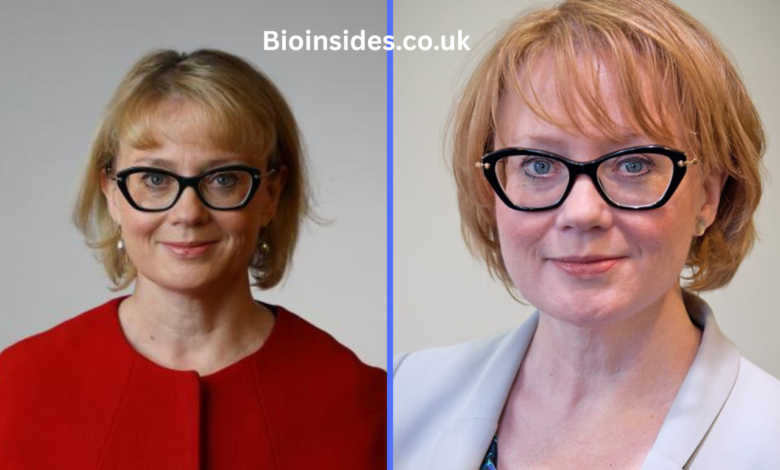
In an era of information overload and viral soundbites, finding a journalist who combines forensic analysis with genuine compassion is rare. Yet, for millions of families across the United Kingdom, there is one name that has become synonymous with clarity amidst the chaos of educational reform, exam results, and the unprecedented challenges of modern schooling. That name is Branwen Jeffreys. As the BBC’s first-ever Education Editor, she has spent decades not just reporting the news, but helping parents, students, and teachers decode the policies that shape our future. From the high-stakes drama of A-level results day to the silent struggles of children missing classrooms, Jeffreys brings a distinctive, human touch to the often-turbulent world of public policy. She doesn’t just explain what is happening; she explores why it matters and who it impacts, making her one of the most respected broadcasters in the industry today. But who is the woman behind the authoritative reports, and how did a girl from Wales end up holding the British government to account on behalf of the nation’s children?
Quick Facts about Branwen Jeffreys
| Attribute | Details |
|---|---|
| Full Name | Branwen Jeffreys |
| Profession | Journalist, Broadcaster, Education Editor at BBC News |
| Nationality & Heritage | British (Welsh Heritage) |
| Birthplace | Wrexham, Wales |
| Age | Early 50s (Exact birth year not publicly specified) |
| Parents | Mother and Father (Strong influence on her love of learning) |
| Siblings | Information not widely publicized (Values privacy) |
| Education | BA (Hons) in History, University of Bristol |
| Net Worth | Estimated £500,000 – £750,000 (Derived from BBC salary & speaking engagements) |
| Notable Role | Governor of The Health Foundation; Regent of the Royal College of Surgeons Edinburgh |
| Social Media | Twitter/X: @BranwenJeffreys |
Early Life and the Welsh Foundation
To understand Branwen Jeffreys’ journalistic ethos, you have to look at her roots. Born in Wrexham, a historic market town in North Wales, Jeffreys carries her Welsh identity with a quiet, dignified pride that resonates through her work. Growing up in the Welsh valleys provides a specific perspective on life—one that is acutely aware of community, industrial history, and the importance of public services. It is this grounding that likely sparked her lifelong obsession with what she calls “our experience of using public services” .
However, the primary architects of her curiosity were her parents. Jeffreys often reflects on her childhood with genuine fondness, specifically crediting her father for nurturing her intellectual appetite. She recalls that he would always find her a good book, effectively building a library of wonder in their living room . Meanwhile, her mother provided a lesson in lifelong learning that would stick with her forever. In a testament to the belief that education never ends, her mother graduated from university during her retirement years . This household environment—where books were treasures and learning was a family value regardless of age—instilled in young Branwen the belief that circumstances do not have to define destiny.
She took this intellectual rigor to the University of Bristol, where she pursued a Bachelor of Arts with Honours in History . Studying history was the perfect training ground for a journalist. It taught her that context is everything, that events rarely happen in a vacuum, and that to understand the present, you must dig deep into the past. This analytical skill would become the bedrock of her career, allowing her to spot trends in education policy that others missed.
The Path to Broadcasting
Unlike the glamorous portrayals of journalism in film, Jeffreys’ entry into the industry was defined by a deep-seated desire to cover issues that actually matter to the average person. She joined the BBC, an institution she would come to define, and cut her teeth covering the gritty realities of the National Health Service. For over a decade, as a Health Correspondent, she wasn’t just standing outside hospitals; she was inside the operating system of British society.
Her tenure as a health specialist (from roughly 2004 to 2015) coincided with some of the most turbulent years for the NHS . She navigated the complex ethics of healthcare rationing, the devastating reports of the Mid-Staffordshire Hospital public inquiry, and the massive overhaul of the Health and Social Care Act . In 2008, to mark the 60th anniversary of the NHS, she hosted a series of live debate programs on BBC Radio 4 that showcased her ability to handle raw, unscripted public sentiment .
It was here that Jeffreys created a signature style: the “forensic eye.” She developed the BBC’s emergency wait tracker—a data-driven tool that held hospitals accountable—proving early on that she was a journalist interested in hard evidence, not just political spin . This ability to translate complex data into relatable human tragedy or triumph made her a natural fit for the next big step.
The Historic Role as Education Editor
In 2015, a landmark moment occurred at the BBC. The corporation created and appointed its first-ever Education Editor, and Branwen Jeffreys stepped into the role . This wasn’t just a promotion; it was a recognition that education had become the frontline of social debate in Britain. Suddenly, the focus shifted from the hospital ward to the classroom.
Taking on this role meant tackling the “alphabet soup” of British education—SATs, GCSEs, A-levels, T-levels, and Ofsted ratings—and making sense of them for worried parents. Jeffreys’ approach has always been to look at the human impact. She has reported extensively on the school funding crisis, often dubbed the “Nightingale Review,” exploring how budget cuts affect class sizes and special educational needs (SEN) provisions. She has delved into the mental health crisis gripping teenagers, looking at the pressure of social media and academic performance simultaneously.
Perhaps her finest hour—or longest year—was the COVID-19 pandemic. As schools shuttered, exams were canceled, and parents became teachers overnight, Jeffreys was the calm, rational voice on the screen. She didn’t just read government statements; she interrogated them. She looked at the digital divide, exposing how the lack of laptops and Wi-Fi was locking a generation of disadvantaged children out of learning . She explored the psychological toll of isolation on young children and the anxiety of university students stuck in dormitories. Her reporting during this time was not just informative; it was a public service, helping a desperate nation navigate the impossible.
Beyond the Newsroom: Governance and Influence
Branwen Jeffreys’ influence extends far beyond the television studio. She is deeply invested in the architecture of a good society. In 2015, she became a Governor of The Health Foundation, one of the UK’s most prestigious charities dedicated to improving healthcare quality . In this capacity, she helps steer research into equitable access and learning (REAL), linking her expertise in education with the social determinants of health .
More recently, in a role that speaks volumes about her professional standing, Jeffreys was formally appointed and robed as a Regent of the Royal College of Surgeons Edinburgh . This is a significant honor, not just for a journalist, but for a woman who is a non-medical professional. The Court of Regents provides strategic advice to the college, enhancing its influence and visibility. It is a testament to how the medical world values her ethical judgment and understanding of public accountability. Her late father was a fellow of the college, adding a layer of poignant, personal legacy to this achievement .
Personal Life, Net Worth, and Digital Presence
While Branwen is a public figure by trade, she remains relatively guarded about the intimate details of her home life, preferring to let her work speak for itself. This sense of boundary is typical of serious journalists who believe the news is about the subject, not the narrator. However, it is known that her personal motivation stems from a deep curiosity about “what shapes our life chances, whether that’s our circumstances or what we make of them” .
Regarding her financial standing, it is estimated that Branwen Jeffreys has a net worth in the range of £500,000 to £750,000. This wealth is primarily accumulated through her long-standing salary at the BBC—a public broadcaster that publishes salary bands for senior editors—supplemented by fees from public speaking and moderation engagements. As a top-tier editor and speaker, she is highly sought after for conferences, where she charges a fee to share her insights on educational policy and youth development .
On social media, specifically X (formerly Twitter) under the handle @BranwenJeffreys, she is a model of professional engagement. She does not engage in petty arguments or gossip. Instead, her feed is a curated stream of breaking news, thoughtful analysis, and retweets of educational research. She uses her platform to amplify the voices of teachers and students, turning her digital presence into an extension of her broadcast role.
Recent Updates and Legacy
As of 2025, Branwen Jeffreys remains a dominant force at the BBC. Her recent work involves scrutinizing the long-term “Covid generation”—looking at rising absenteeism and the strain on child mental health services. She continues to hold the government’s feet to the fire regarding teacher pay and retention, reporting on strikes not as logistical disruptions but as human cries for sustainability in the profession .
Looking to the future, Jeffreys shows no signs of slowing down. Her recent appointment as a Regent suggests she is building a post-BBC legacy anchored in academic and medical philanthropy. She is also a passionate supporter of “Speakers for Schools,” a charity that brings inspirational figures into state classrooms, aiming to level the playing field for teenagers who lack the connections of their private school peers .
Conclusion
As Branwen Jeffreys continues to pave the way for future generations, her story stands as a reminder of how resilience and purpose can shape a meaningful legacy. She is not a celebrity journalist; she is an investigator, a historian of the present, and a protector of the vulnerable. From a book-filled home in Wrexham to the helm of the BBC’s education coverage, she has proven that the best journalism is driven not by ego, but by empathy. In a world quick to dismiss the news as “noise,” Branwen Jeffreys remains a signal of clarity, proving that asking the right questions is often more important than knowing the right answers.