Zohran Mamdani Net Worth: The Story of NYC’s Historic Mayor

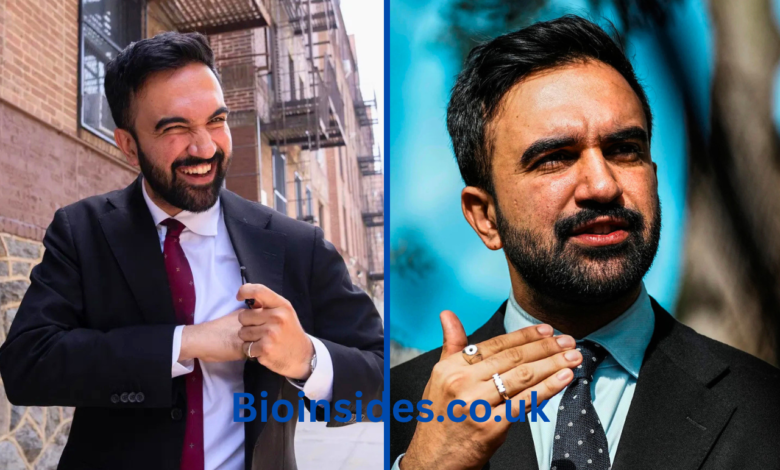
In a city synonymous with towering skyscrapers, immense wealth, and larger-than-life ambition, the election of Zohran Mamdani as Mayor of New York City felt like a seismic shift. Here was a man who didn’t own a car, lived in a rent-stabilized apartment, and took the subway to his own victory party, defeating political heavyweights and billionaires along the way. His story isn’t just a political triumph; it is a powerful narrative about identity, authenticity, and the enduring appeal of a leader who genuinely reflects the struggles of the working class. As the first Muslim, first Indian-origin, and first African-born mayor of America’s largest metropolis, Mamdani’s journey from the streets of Kampala, Uganda, to the helm of City Hall is a testament to the fact that in a city of eight million stories, the most unexpected one can sometimes be the most powerful.
Table of Contents
ToggleQuick Facts about Zohran Mamdani
| Detail | Information |
|---|---|
| Full Name | Zohran Kwame Mamdani |
| Age | 34 (Born October 18, 1991) |
| Profession | Politician, 112th Mayor of New York City |
| Parents | Mira Nair (Mother – Filmmaker) & Mahmood Mamdani (Father – Academic) |
| Siblings | Not publicly disclosed |
| Birthplace | Kampala, Uganda |
| Nationality | American (Naturalized in 2018), Ugandan |
| Net Worth | Approximately $200,000 (as of 2025) |
| Spouse | Rama Duwaji (m. 2025) |
| @zohranmamdani | |
| Twitter (X) | @ZohranMamdani |
| Zohran Mamdani |
Early Life and the Shaping of a Global Identity
To understand Zohran Mamdani, one must first understand the rich, complex, and often challenging tapestry of his origins. Born in Kampala, Uganda, on October 18, 1991, he was given the middle name “Kwame,” a deliberate nod to the Ghanaian pan-Africanist leader Kwame Nkrumah, signifying his parents’ deep-rooted belief in African liberation and identity. His family was one of immense intellectual and cultural capital. His mother, Mira Nair, is an Oscar-nominated Indian filmmaker celebrated for iconic movies like Monsoon Wedding and Salaam Bombay!. His father, Mahmood Mamdani, is a towering figure in postcolonial studies and a professor at Columbia University, whose academic work has profoundly influenced the understanding of colonialism and its aftermath.
However, this privilege existed in a context of stark inequality. In Uganda, the South Asian community has historically been wealthier than the Black Ugandan majority. This disparity was violently underscored in 1972 when the dictator Idi Amin expelled thousands of South Asians, including Mamdani’s father. The shadow of this history, the legacy of empire, and the realities of racial and economic division were formative. His family left Uganda when he was five, spending a brief period in South Africa before finally settling in New York City when he was seven.
Growing up in Morningside Heights, Manhattan, Mamdani navigated a multiplicity of identities: Indian, African, American. This unique upbringing instilled in him a sharp awareness of injustice and belonging, themes that would later become the bedrock of his political philosophy. He has spoken about a childhood incident in a Kampala school where a teacher asked Indian students to raise their hands. Mamdani refused, declaring, “I am not Indian, I am Ugandan,” a powerful early assertion of his identity in a land that was both his home and a place of complex racial dynamics.
Education and the Call to Service
Mamdani’s education continued in New York, where he attended the prestigious Bronx High School of Science. There, he co-founded the school’s first-ever cricket team, showcasing his ability to build community around shared interests. He then pursued higher education at Bowdoin College in Maine, graduating in 2014 with a Bachelor’s degree in Africana Studies. His choice of major was a direct continuation of his intellectual heritage and his personal quest to understand his roots and the forces shaping the world. At Bowdoin, he co-founded the campus chapter of Students for Justice in Palestine, an early demonstration of his political conscience and willingness to advocate for controversial causes.
After college, Mamdani did not immediately seek political power. Instead, he chose a path of direct service, working as a housing counselor in Queens. In this role, he helped low-income homeowners and immigrant families navigate the complex and often brutal foreclosure process, fighting to keep them in their homes. This experience was transformative. It was his “boots on the ground” education in the very real, tangible suffering caused by economic inequality and the unaffordable cost of living. He saw firsthand how systems failed the most vulnerable New Yorkers, and it was this frustration and empathy that propelled him from advocacy to politics.
Political Ascent: From Underdog to Mayor
Zohran Mamdani’s entry into electoral politics was the logical next step in his mission to serve working-class New Yorkers. In 2020, he ran for the New York State Assembly in the 36th District, which includes neighborhoods like Astoria. He was a true underdog, challenging a five-term incumbent. But with a powerful grassroots campaign rooted in housing justice and tenant protections, he pulled off a stunning upset. This victory established him as a rising star in the progressive movement and a key figure within the Democratic Socialists of America (DSA).
His tenure in the Assembly was marked by his bold, unapologetic advocacy for radical policies. He championed free public transit, universal childcare, and a “good cause” eviction bill to protect tenants. But it was his decision to run for Mayor of New York City in October 2024 that would truly change the course of his life and the city’s history. He was virtually unknown to the broader public, facing off against political giants like former Governor Andrew Cuomo.
Mamdani’s campaign was a masterclass in modern, digital-first, people-powered politics. He bypassed traditional media and connected directly with voters through authentic, often humorous, social media content. His campaign videos went viral, resonating deeply with younger voters and working-class communities across the city. He ran on a platform squarely focused on the affordability crisis, promising to freeze rents, make buses fare-free, create city-owned grocery stores, and implement universal childcare.
The contrast with his rivals, especially the wealthy Cuomo, was stark. Mamdani’s modest lifestyle—his rented apartment, his lack of a car, his use of the subway—wasn’t a political gimmick; it was his life. It made him relatable and trustworthy in the eyes of voters tired of out-of-touch elites. His stunning victory in the Democratic primary and subsequent win in the general election was a declaration from New Yorkers that they were ready for a new kind of leadership. He made history, becoming the city’s first Muslim, first South Asian, first African-born mayor, and the youngest in over a century.
Understanding Zohran Mamdani’s Net Worth
Perhaps the most astonishing aspect of Zohran Mamdani’s political ascent is his personal financial status. In a race against a former governor worth an estimated $10 million, Mamdani’s net worth was a tiny fraction of that. As of 2025, Forbes and other financial analysts estimate Zohran Mamdani’s net worth to be approximately **$200,000**. This figure stands in stark contrast not only to his opponents but also to the immense wealth of the city he now governs.
The majority of his declared assets are not in cash or stocks but in a single, undeveloped piece of land in Jinja, Uganda, near the source of the Nile River. The land, which he inherited from his family, is valued between $150,000 and $250,000. Financial disclosures have shown some inconsistency regarding the year he acquired it—some reports say 2012, others 2016—but it remains his only notable asset. Beyond this, he reported less than $5,000 in savings and a modest $1,000 in royalties from his brief career as a rapper, performing under the name “Mr. Cardamom” or “Young Cardamom”.
His annual salary as a state assembly member was $142,000. As mayor, this will increase to $260,000. However, his lifestyle does not reflect these earnings. He lives in a rent-stabilized one-bedroom apartment in Astoria, Queens, paying around $2,250 a month. He does not own a car and is a regular rider of the New York City subway, often spotted carrying his own backpack. This frugal existence is a deliberate choice that aligns with his political identity. He proudly refers to himself as “a tenant and transit rider,” using his own experience of living within a tight budget to connect with the struggles of his constituents. His modest net worth is not a liability but a powerful political asset, proving that his advocacy for the working class is not just rhetoric but a reflection of his own life.
Personal Life, Beliefs, and Daily Routine
Away from the cameras and the campaign trail, Zohran Mamdani is a man of deep personal conviction. He is a practicing Shia Muslim, part of the Khoja community with roots in Gujarat, India. Throughout his campaign, he made his faith visible, visiting mosques regularly and never shying away from his identity, even in the face of Islamophobic attacks. He has spoken about the personal sacrifices and the loss of safety that comes with standing in public as a Muslim, yet he uses his platform to foster unity and understanding.
In February 2025, Mamdani married Rama Duwaji, a Syrian-American artist, animator, and illustrator. The couple met on the dating app Hinge in 2021. Duwaji, known for her creative work, has largely stayed out of the political spotlight but is a steadfast supporter of her husband’s career. His personal life is a grounding force, providing a sense of normalcy amidst the chaos of his high-profile career.
His daily routine is a far cry from the typical mayor-elect. Instead of being chauffeured in a luxury SUV, he takes the subway. Instead of dining at exclusive restaurants, his life is that of a typical middle-class New Yorker dealing with the city’s high cost of living. This authenticity is what makes him so compelling. He is not a politician who merely talks about the struggles of the common person; he lives them. His schedule is a blend of rigorous policy work, community engagement, and maintaining the human connections that fueled his rise.
The Man, The Movement, and The Future
Mamdani’s use of social media was arguably the single most crucial element of his electoral victory. He didn’t use it as a one-way broadcast tool but as a means of genuine, two-way conversation. His campaign created a movement by blending humor, memes, and serious policy discussions in a way that had never been seen before in U.S. politics. He communicated with voters in multiple languages, including Urdu, Bangla, Spanish, and Arabic, demonstrating a profound respect for the city’s diversity. This digital strategy, combined with an army of over 22,000 volunteers, built a hyper-local, grassroots momentum that defied all traditional political odds.
Looking to the future, Mayor Mamdani faces the monumental task of turning his bold campaign promises into reality. His agenda includes freezing rents for stabilized tenants, making all city buses fare-free, implementing free childcare for children aged six weeks to five years, and creating a network of city-owned grocery stores to combat food price inflation. He has also proposed a radical reimagining of public safety, replacing traditional policing with a public health approach through a new Department of Community Safety.
These policies are ambitious and will face significant opposition from powerful real estate, business, and political interests. However, Mamdani’s victory was a mandate for change. He has shown that a message centered on economic justice, affordability, and authenticity can resonate with a broad swath of the electorate. His continued influence was cemented when he was dubbed a “kingmaker” by The New York Times after several of his endorsed progressive candidates won primary races, proving his political capital extends far beyond his own office. The world is now watching to see if the man who rose from obscurity on a wave of hope can deliver the transformative change he promised.
Conclusion: A Legacy of Authenticity and Resilience
Zohran Mamdani’s story is more than a political biography; it is a powerful narrative about the American Dream redefined. It speaks to the power of authenticity in a world starved for it and the resilience required to challenge a system built on wealth and influence. From the streets of Kampala to the corridors of power in City Hall, his journey is a testament to the fact that one person’s conviction and connection to their community can indeed change the world. As Mayor Zohran Mamdani continues to pave the way for future generations, his story stands as a reminder of how resilience and purpose can shape a meaningful legacy.
Read this to: Jane Goldman: The Acclaimed Screenwriter and Author Behind the Scenes
Frequently Asked Questions (FAQs)
What is Zohran Mamdani’s net worth?
Zohran Mamdani’s net worth is estimated to be around $200,000. This figure is significantly lower than that of his political rivals and is primarily tied to a piece of inherited land in Uganda.
Where was Zohran Mamdani born?
He was born in Kampala, Uganda, on October 18, 1991.
Who are Zohran Mamdani’s parents?
He is the son of Oscar-nominated filmmaker Mira Nair and renowned Columbia University professor Mahmood Mamdani.
Is Zohran Mamdani married?
Yes, he married Rama Duwaji, a Syrian-American artist, in February 2025.
What is Zohran Mamdani’s political affiliation?
He is a member of the Democratic Party and the Democratic Socialists of America (DSA). He describes himself as a democratic socialist.
What are Zohran Mamdani’s key policy goals?
His platform focuses on making New York more affordable. Key proposals include freezing rents, making all city buses fare-free, providing free childcare, and creating city-owned grocery stores.
What was Zohran Mamdani’s job before politics?
Before entering politics, he worked as a housing counselor, helping low-income New Yorkers avoid foreclosure and eviction.