The Listener Who Shaped History: The Remarkable Rise of Gary O’Donoghue

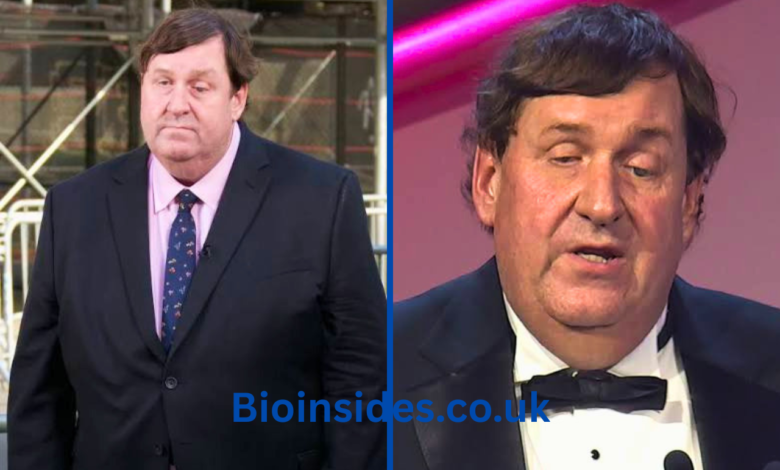
Imagine being in the middle of a crowded political rally, chaos erupting around you, and the only thing you can rely on is your ears. That was the reality for BBC journalist Gary O’Donoghue at the Butler, Pennsylvania rally in July 2024 when shots rang out and Donald Trump was hit. While others scrambled in confusion, O’Donoghue’s finely tuned hearing immediately recognized the gunfire—a skill sharpened over a lifetime without sight. Within moments, he secured a vital interview with an eyewitness that would reveal astonishing security lapses and become global news. This is the story of a man who turned his blindness into a superpower, becoming one of the most respected and recognizable voices in broadcast journalism. From the corridors of Westminster to the high-stakes world of American politics, Gary O’Donoghue’s journey is a testament to resilience, talent, and the power of listening.
Table of Contents
ToggleQuick Facts
| Category | Details |
|---|---|
| Full Name | Gary O’Donoghue |
| Born | 1968 (age 57–58) |
| Birthplace | London, England |
| Education | Worcester College for the Blind; Christ Church, University of Oxford (Philosophy & Modern Languages) |
| Profession | Journalist, Chief North America Correspondent for BBC News |
| Parents | Father Frank (semi-professional footballer & taxi driver); Mother (ballroom dance teacher) |
| Siblings | Two brothers: Steven and Andrew |
| Partner | Sarah Lewthwaite |
| Children | One daughter |
| Net Worth (Est.) | Approximately $1 million – $3 million (Estimated) |
| Twitter (X) | @BBCBlindGazza |
| Available (Gary O’Donoghue) |
Early Life and Education: Forging Character in the Face of Adversity
Gary O’Donoghue was born in North London in 1968 into a family that was anything but ordinary. His father, Frank, was a semi-professional football player who also worked as a taxi driver to make ends meet, while his mother taught ballroom dancing. This eclectic mix of athleticism, hard graft, and artistic flair created a vibrant household that would shape young Gary’s worldview.
O’Donoghue was born with partial sight, but for reasons that remain unknown, he lost his vision entirely by the age of eight. This could have been a devastating blow for any child, but for Gary, it became the foundation upon which he built his extraordinary life. He was sent to Worcester College for the Blind, a specialist boarding school that, at the time, was a boys-only institution. It was here that he not only learned to navigate the world without sight but also discovered his competitive spirit, playing blind football for England.
His time at Worcester College was instrumental in shaping his resilience. Rather than being coddled, he was given the tools to compete and thrive. This fierce independence would later become his trademark in the cutthroat world of political journalism.
After his schooling, O’Donoghue achieved a remarkable academic feat: he won a place at the University of Oxford. He attended Christ Church, one of the university’s most prestigious colleges, where he read Philosophy and Modern Languages. Studying philosophy taught him to deconstruct arguments and think logically—skills essential for any journalist. His linguistic abilities would later prove invaluable when reporting from conflict zones and across continents. Oxford wasn’t just an education; it was a declaration of intent. A blind man from Essex was not going to be limited by society’s expectations.
The BBC Years: From Junior Reporter to Chief Correspondent
O’Donoghue’s career with the BBC began with work experience—a foot in the door that he would never let close. Upon graduating from Oxford, he joined the corporation as a junior reporter on the flagship Radio 4 programme, Today. This was the starting point for an ascent that would see him cover some of the most defining events of the late 20th and early 21st centuries.
In the early days, he cut his teeth on the regional desk at Westminster, learning the intricate dance of British politics from the ground up. He moved on to work as a staff reporter on The World Tonight and spent five years at The Today Programme, where he reported from Africa, Asia, and Europe, as well as around the UK. His career is a masterclass in versatility. He has filed stories from the Macedonian border during the Kosovo conflict, covered the horrors of the Iraq War, and chronicled seven British general elections.
In 2004, he was already making a name for himself, covering stories for BBC News across multiple continents. His ability to remain calm under pressure and his knack for asking the right questions saw him rise through the ranks. He eventually became Radio 4’s Chief Political Correspondent in London. At one point, his dedication to the story was so total that he was even asked to bungee jump off Chelsea Bridge for a feature—a testament to his willingness to do whatever it took for a good broadcast.
But the biggest challenge and opportunity came in 2014 when he was posted to Washington, D.C. as the BBC’s Washington Correspondent. This move was historic. Gary O’Donoghue became the first disabled person to be posted as a foreign correspondent for the BBC. It was a glass ceiling he didn’t just break; he shattered it.
Covering the American Century: Trump, Biden, and the Chaos of Politics
Since arriving in the United States, O’Donoghue has been at the epicentre of American political life. He has covered the administrations of Presidents Obama, Biden, and Trump—including Trump’s two terms. His analysis is now a staple for BBC audiences trying to make sense of the often bewildering pace of US politics.
In March 2025, the BBC announced Gary O’Donoghue as its new Chief North America Correspondent, a role that formalized his position as the leading voice on American affairs for the corporation. In this capacity, he works alongside North America Editor Sarah Smith, delivering outstanding live coverage and analysis of the biggest stories in American politics and society.
His reporting is characterized by a unique perspective. As he told The Guardian, being blind in journalism allows him to focus entirely on the words. “One of the advantages of being blind and in journalism is that you can focus on the words. I’m a listener.” This auditory focus makes him a formidable interviewer. He isn’t distracted by the visual noise of a rally or a press conference; he is purely tuned into the nuance of what is being said.
His coverage of the 2024 assassination attempt on Donald Trump at the Butler rally was a career-defining moment. He didn’t just report the story; he was in the middle of it, diving for cover alongside the former president. In the immediate aftermath, while the world was still trying to understand what had happened, O’Donoghue was already on the air, describing the scene and securing interviews. His calm, authoritative delivery during those chaotic moments provided a lifeline of clarity to millions of viewers worldwide. For this exceptional work, his team was awarded the Royal Television Society Breaking News Award.
Major Achievements and Awards: A Career of Firsts
Gary O’Donoghue’s career is marked by a series of firsts and prestigious accolades:
-
First Disabled Foreign Correspondent: He is the first disabled person to be posted as a foreign correspondent for the BBC, paving the way for greater diversity in the industry.
-
Royal Television Society Breaking News Award (2025): Awarded for his team’s outstanding coverage of the attempted assassination of Donald Trump.
-
One World Media Best Radio Documentary Award: Received for a program on river blindness in Ghana, demonstrating his commitment to covering global health issues.
-
Exclusive Presidential Interview: In 2025, he secured a 20-minute exclusive phone interview with Donald Trump, who was then the sitting US President.
-
Seven UK General Elections: Has chronicled seven British general elections, showcasing his deep understanding of UK politics.
Personal Life and Beliefs: Beyond the Newsroom
When he isn’t navigating the pressures of Washington politics, O’Donoghue is a family man. He lives with his partner, Sarah Lewthwaite, and their daughter. They maintain a home in West Yorkshire, providing a grounding contrast to the high-octane life of a Washington correspondent.
Despite his global profile, O’Donoghue remains a private individual who values his family time. He divides his time between Washington D.C., London, and Yorkshire, balancing the demands of a 24-hour news cycle with the quiet rhythms of family life.
He is also a passionate advocate for disability rights and accessibility, though he often prefers to let his work do the talking. In March 2026, he made headlines for vowing to boycott a major high street chain after a staff member made a patronising remark, telling him not to go out alone. This incident highlighted the everyday ableism that disabled people face and O’Donoghue’s willingness to stand up against it. He is a living example of capability, constantly challenging the preconceptions of what a blind person can achieve.
Net Worth and Income: A Respected Career
As a senior journalist and Chief Correspondent for the BBC, Gary O’Donoghue commands a significant salary. While exact figures are not publicly disclosed, it is estimated that his net worth is in the range of $1 million to $3 million. His income is derived primarily from his salary at the BBC, which is one of the world’s leading public service broadcasters. His promotion to Chief North America Correspondent in 2025 likely came with a substantial increase in compensation, reflecting his experience and the critical nature of his role.
It’s important to note that O’Donoghue’s wealth is not just financial. His true net worth lies in his reputation as one of the most trusted journalists in the industry—a reputation built on decades of accurate, fair, and courageous reporting.
Social Media and Audience Engagement
O’Donoghue maintains an active presence on social media, primarily on Twitter (X) under the handle @BBCBlindGazza. On this platform, he shares insights into his reporting, behind-the-scenes glimpses of major news events, and his analysis of US politics. He uses the platform to engage with the audience, often clarifying his reporting or highlighting key stories.
He is also active on LinkedIn, where he shares his professional articles and connects with colleagues and followers in the industry. His social media presence is professional, insightful, and occasionally personal, allowing the public to see the man behind the microphone. He is careful to note that the views he expresses on Twitter are his alone, maintaining the BBC’s strict impartiality guidelines.
Recent Updates and Future Goals
Gary O’Donoghue continues to be at the forefront of global news coverage. In April 2026, he was present at the White House Correspondents’ Dinner when gunshots rang out at the venue. Once again, he was on the scene, describing the confusion and fear in the room as the event descended into chaos.
In June 2026, he was the guest on the iconic BBC Radio 4 programme, Desert Island Discs. The episode provided a rare and intimate glimpse into his life, his career, and the music that has shaped him. He shared the eight tracks, book, and luxury item he would take to a desert island, revealing a thoughtful and reflective side to the hard-nosed journalist.
Looking ahead, O’Donoghue shows no signs of slowing down. His goal remains to provide the clearest possible analysis of American politics to a global audience. As the United States enters a period of significant change and global geo-politics shift, his experience and expertise will be more vital than ever. He is also committed to mentoring the next generation of journalists, particularly those with disabilities, proving that the path he forged is one that others can follow.
Conclusion
Gary O’Donoghue’s story is far more than a tale of overcoming disability. It is a story about the relentless pursuit of truth, the power of adaptation, and the courage to enter the lion’s den of American politics armed only with a microphone and an unshakeable sense of purpose. From losing his sight as a child to becoming the BBC’s authoritative voice in Washington, he has consistently proven that vision is not a matter of the eyes, but of the mind.
His journey challenges us all to look beyond our limitations and to listen more intently to the world around us. As he continues to cover history in the making, his influence reaches far beyond the newsroom, inspiring millions with his resilience, his integrity, and his unwavering dedication to journalism. As Gary O’Donoghue continues to pave the way for future generations, his story stands as a reminder of how resilience and purpose can shape a meaningful legacy.
Read this to: Joe Wilkinson: The Deadpan Comedy Genius Who Redefined British Humour
Frequently Asked Questions (FAQs)
1. Is Gary O’Donoghue completely blind?
Yes, Gary O’Donoghue was born partially sighted but lost his sight completely by the age of eight. He is registered blind and navigates the world using audio cues, Braille, and assistive technology.
2. What is Gary O’Donoghue’s role at the BBC?
He is the Chief North America Correspondent for BBC News. Based in Washington D.C., he covers American politics and major events for UK and global audiences.
3. How does Gary O’Donoghue do his job without sight?
He relies heavily on his hearing and memory. He uses screen-reading software for computers and smartphones to access information and scripts. He also works closely with a senior producer who helps him navigate visual elements and provides descriptive context for stories.
4. Did Gary O’Donoghue win any awards recently?
Yes, his team won the Royal Television Society Breaking News Award in 2025 for their coverage of the attempted assassination of Donald Trump.
5. Who is Gary O’Donoghue’s partner?
He is in a long-term relationship with Sarah Lewthwaite. The couple has one daughter and maintains a home in West Yorkshire, UK.
6. Where was Gary O’Donoghue born and educated?
He was born in London, England, in 1968. He was educated at Worcester College for the Blind and later studied Philosophy and Modern Languages at Christ Church, University of Oxford.