Introduction
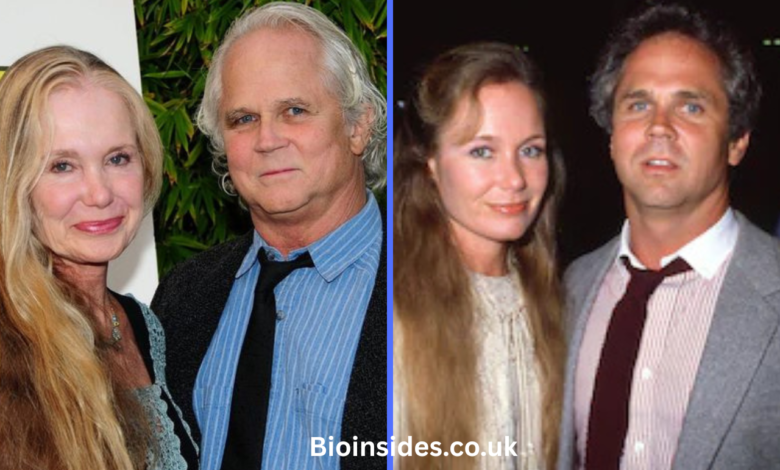
In an era where fame often demands constant visibility, Lauren Shulkind stands as a refreshing testament to quiet dignity, artistic passion, and unwavering loyalty. While many recognize her as the devoted wife of the late Tony Dow—the man who brought the all-American big brother Wally Cleaver to life in the classic sitcom Leave It to Beaver—Lauren’s own story is far from a simple Hollywood footnote. She is a celebrated mosaic artist, a former advertising executive, and a woman who navigated the complexities of life beside a television icon while maintaining her own creative identity. For over forty years, she was the anchor in Dow’s life, helping him battle personal demons and celebrating his triumphs, all while crafting beautiful, intricate art with her own hands. This is the story of a woman who proves that sometimes, the most powerful influence is the one that stays gently out of the spotlight.
Quick Facts & Bio
| Category | Details |
|---|---|
| Full Name | Lauren Carol Shulkind (also known as Lauren Dow) |
| Date of Birth | September 29, 1947 |
| Age | 78 years old (as of 2026) |
| Birthplace | New York City, New York, USA |
| Profession | Mosaic Artist, Former Advertising Production Coordinator |
| Parents | Maurice Shulkind and Leona “Lee” Katzman Shulkind |
| Siblings | Steven Shulkind (Brother) |
| Marital Status | Widow (Married to Tony Dow from 1980 until his death in 2022) |
| Spouse | Tony Dow (m. June 16, 1980 – July 27, 2022) |
| Step-Children | Christopher Dow (Son) |
| Education | Shawnee Mission East High School; Kansas City Art Institute |
| Net Worth | Estimated $4–5 Million (combined assets) |
| N/A (Private/Inactive) | |
| Notable Fact | Cast Tony Dow in a McDonald’s commercial years before they married |
Early Life and Artistic Roots in New York
Lauren Shulkind was born on September 29, 1947, in the bustling cultural hub of New York City. Growing up in a city that never sleeps, surrounded by museums, galleries, and diverse architectural styles, Lauren was instinctively drawn to the visual arts. Her parents, Maurice Shulkind and Leona “Lee” Katzman Shulkind, provided a stable and nurturing environment that valued education and personal expression. Unlike many who chase the glitz of the entertainment industry, Lauren’s upbringing was grounded in authenticity. Her mother, Lee, lived to be 98 years old, passing away in 2016, and is often described as a pillar of strength for the family, a trait she passed down to her daughter.
The Shulkind family eventually moved to the Midwest, settling in the Kansas City area. It was here that Lauren’s artistic talents were formally honed. She attended Shawnee Mission East High School in Prairie Village, Kansas, where she began exploring the relationship between color, texture, and form. Following high school, Lauren made the decision to pursue her passion professionally, enrolling at the prestigious Kansas City Art Institute.
It was at the Art Institute that Lauren found her true calling: mosaic art. Unlike painting or drawing, mosaics require a unique blend of patience, geometry, and emotional intuition. Learning to break and arrange glass, stone, and ceramic fragments into cohesive images taught her a valuable life lesson: that broken pieces can be rearranged to create something beautiful. This philosophy would later serve her well during the difficult times in her personal life.
A Career Before the Spotlight: The Advertising Years
Before she became known as a mosaic artist, Lauren Shulkind had a successful career in the corporate world. After her education, she worked at Bernstein Rein Advertising in Kansas City, a role that placed her squarely in the fast-paced world of production and casting. This job required sharp organizational skills, an eye for talent, and the ability to handle high-pressure situations—all skills Lauren possessed in spades.
In a twist of fate that feels like it was written for the big screen, it was during this time that Lauren crossed paths with Tony Dow. At the time, Dow was already a household name, but he was looking for work in regional commercials. Lauren was responsible for casting a local McDonald’s advertisement. She hired Tony for the gig, marking their very first professional interaction.
Little did she know that the actor she was directing in a fast-food commercial would become her life partner. Lauren’s colleagues at the agency remember her as a “cool” and composed professional who was unfazed by Dow’s celebrity status. “I was pretty thrilled that he would think that I was cool enough to want to be with me,” Shulkind recalled in a 2003 interview. “With time, he just seemed to be a regular guy. It didn’t take long. But I will say, when we were kind of dating, one day I slipped up and called him ‘Wally.’ That was terrible”.
This moment—mixing up the man with the myth—became a charming anecdote in their relationship, humanizing the star of Leave It to Beaver and solidifying their genuine connection.
Meeting Tony Dow: The Beginning of a Lifelong Partnership
The late 1970s were a transitional time for Tony Dow. Having grown up on screen, he struggled with typecasting and the pressure of Hollywood. In 1978, while performing at the Tiffany’s Attic dinner theater in Kansas City, he reconnected with Lauren. This time, the relationship wasn’t just professional; it was deeply personal.
They bonded over shared values that transcended the Hollywood bubble. Both were creative souls who preferred nature and privacy over red carpets and paparazzi. Their courtship was described as natural and unpretentious. Friends noted that they were “two quiet souls who found each other at the right moment”.
On June 16, 1980, Lauren and Tony decided to make it official. Eschewing a lavish celebrity wedding, they eloped to Laguna Beach, California. In a ceremony that perfectly encapsulated their quirky and grounded personalities, they exchanged vows “among the hermit crabs and tide pools”. It was intimate, a little unconventional, and entirely them. Lauren was 32 years old at the time, entering a marriage with a man who came with a history of fame, a previous divorce, and a young son.
Becoming a Stepmother and Building a Blended Family
When Lauren married Tony, she also embraced his son, Christopher Dow, whom Tony had with his first wife, Carol Marlow. Lauren and Tony did not have children together, but Lauren never treated Christopher as anything other than her own. She stepped into the role of stepmother with grace, providing stability without overstepping boundaries.
As Christopher grew up and married Melissa Dow, Lauren welcomed her daughter-in-law with open arms. She later became a step-grandmother to Tyla Dow. In a family that could have been fractured by the complexities of divorce and the entertainment industry, Lauren served as the glue. She fostered a warm, blended environment where holidays and family gatherings were filled with love, not drama. Those who know the family describe Lauren as a nurturing presence who prioritized the emotional health of her stepson, allowing him to forge his own path away from the shadow of his famous father.
The Art of Healing: Lauren’s Career as a Mosaic Artist
While Tony Dow found solace in sculpting bronze and wood, Lauren discovered her voice through the intricate medium of mosaic art. The couple eventually built a shared studio at their home in Topanga, California, a sanctuary nestled in the canyons. Here, they would spend hours side-by-side, Tony casting figures and Lauren piecing together fragments of stained glass and ceramic.
Lauren’s work is characterized by its emotional depth. Mosaics are often seen as decorative, but for Lauren, they were narrative. She focused on themes of nature, balance, and the beauty of imperfection—a concept known in Japanese aesthetics as wabi-sabi. By placing broken shards together to form a flowing stream or a blooming flower, she symbolized the act of healing.
Although she kept a low profile, her work gained respect within the artistic community of Southern California. She exhibited pieces in local galleries and private collections. Unlike her husband, whose art was often viewed through the lens of his television past, Lauren’s art was judged strictly on its own merit. It was her private sanctuary and her public legacy. For Lauren, art was never just a hobby; it was a survival mechanism. She once shared that the precision required for mosaic art helped her quiet her mind, a technique that proved essential when she became the primary caregiver for her ailing husband.
A Partner in the Dark: Battling Depression and Health Crises
Perhaps the most significant, yet least visible, role Lauren played was that of a mental health advocate for her husband. Despite playing the wholesome Wally Cleaver, Tony Dow struggled with severe depression between his 20s and 40s. He often felt trapped by his alter ego, unable to break free from the “perfect big brother” image.
Lauren was instrumental in helping Tony navigate this darkness. She encouraged his shift from acting to directing and eventually to sculpting, recognizing that creative expression was the therapy he needed. She helped him see that his past didn’t have to define his future. Tony often credited Lauren with saving his life, providing the emotional stability he lacked during his earlier years.
In 2021 and 2022, their marriage faced its greatest trial. Tony was diagnosed with cancer. Suddenly, the roles shifted further. Lauren became his full-time advocate and nurse. In May 2022, she took to social media to ask fans for their thoughts, revealing that Tony was undergoing immunotherapy infusions. She was transparent about the “health challenges” they were facing, yet she remained fiercely protective of his dignity.
The Tragic Confusion of July 2022
In the final days of July 2022, Lauren Shulkind experienced a nightmare that no spouse should endure—not just once, but twice. As Tony’s health rapidly declined while in hospice care at their Topanga home, a devastating miscommunication occurred. Exhausted and emotionally shattered, Lauren believed her husband had passed away and informed their management team.
The news spread globally. Headlines announced the death of Wally Cleaver, and tributes poured in from around the world. However, within hours, it became clear a mistake had been made. Tony was still alive, though in his final hours. Lauren was mortified. A reporter noted that Lauren admitted she had been “a little fuzzy” and felt “foolish” about the error. Yet, the public response was overwhelmingly one of compassion. The world saw not a celebrity handler, but a grieving, sleep-deprived wife who was losing her soulmate in real-time. Tony Dow passed away the following day, on July 27, 2022, with Lauren by his side.
Her willingness to be vulnerable during that chaos revealed her humanity. It was a stark, painful reminder that behind every celebrity headline is a real person grappling with real grief.
Net Worth and Financial Lifestyle
Discussions of net worth regarding Lauren Shulkind are often tied to her life with Tony Dow. Estimates of her net worth vary across sources, ranging from $1 million to $5 million, though most credible aggregators place the couple’s combined estate in the $4–5 million range. This wealth was accumulated through Tony’s residuals from Leave It to Beaver, his successful directing work on shows like Babylon 5, and the sale of his sculptures.
Lauren’s own contributions came from her work in advertising and the sale of her mosaic art. However, unlike many Hollywood widows who engage in branding deals or reality television, Lauren has maintained a low financial profile. She lives modestly in the Topanga Canyon home she shared with Tony, a property that is likely her primary asset. Her lifestyle reflects her values: simplicity, artistic integrity, and privacy rather than ostentation.
Social Media Presence and Interaction
If you search for Lauren Shulkind on Instagram or Twitter, you won’t find a flashy influencer page. Her social media presence has always been utilitarian. She primarily used Tony Dow’s official Facebook page to communicate with fans, particularly during his illness. These posts were raw, heartfelt, and direct—void of the polished PR language typical of celebrity accounts.
Since Tony’s passing, Lauren has retreated almost entirely from the digital public square. She has chosen the path of quiet mourning, leaning on her family, her art, and her memories. For her fans, this silence is respected as a natural extension of the woman she has always been: private, dignified, and uninterested in the validation of “likes.” She doesn’t need a platform to validate her legacy; the love she shared and the art she created do that work for her.
Future Goals and Ongoing Projects
As of 2026, Lauren Shulkind is 78 years old and continues to reside in California. While she has largely stepped away from the public eye, those close to her suggest that she continues to work in her studio. For Lauren, creating mosaics is not just a profession; it is a meditative practice. Following the trauma of losing her husband of 42 years, art remains her primary outlet for processing grief.
There is speculation among art collectors that a retrospective of her work, or perhaps a joint exhibition featuring both her mosaics and Tony’s sculptures, could be on the horizon. Such an event would serve as a beautiful capstone to their shared creative journey. However, true to her nature, Lauren is likely in no rush. She is spending time with her stepson Christopher and her granddaughter Tyla, healing the quiet way she has always done everything: away from the cameras, but with immense grace.
Legacy and Lessons in Resilience
Lauren Shulkind’s life is a masterclass in quiet resilience. In a society that equates value with visibility, she chose the opposite. She found value in supporting her partner, in creating beauty with her hands, and in maintaining her integrity regardless of the circumstances.
Her story teaches us that you don’t have to be the loudest voice in the room to be the strongest. When the media spotlight blazed during Tony’s final days, she fumbled, cried, and made mistakes—and the world loved her more for it because it was real. She taught the public that being a caregiver is messy, that grief is disorienting, and that love is often about logistics—driving to hospital appointments, mixing medicine, and holding a hand in the dark.
As a female artist, Lauren carved out a space that was entirely her own, separate from her husband’s fame. Her mosaics stand as a testament to the idea that patience can turn fragments into masterpieces. As a stepmother and wife, she redefined what family looks like in the 21st century. And as a woman navigating the loss of a cultural icon, she showed us how to say goodbye with dignity.
As Lauren Shulkind continues to pave the way for future generations of artists and caregivers, her story stands as a reminder of how resilience and purpose can shape a meaningful legacy. She proves that the most beautiful portraits are often painted in the margins of history, not the center of it.