Introduction
Ever wonder who is behind the trustworthy news you see on the BBC? You might recognize the face, but the names sometimes blur together. Well, let me introduce you to a powerhouse you should know about. Fiona Trott is a name that carries significant weight in British broadcasting.
As a Senior Broadcast Journalist for the BBC, Fiona has been a constant presence in the news landscape for decades. She currently serves as the BBC’s North of England Correspondent, covering the stories that shape the lives of millions. She doesn’t just read the news. She digs deep into communities, politics, and human interest stories to bring you the full picture.
In this article, we are going to pull back the curtain on her career. You will learn how she moved from European politics to your television screen. We will look at her unique skills, her reporting style, and why she is such a trusted voice in a chaotic industry.
By the end of this read, you will not only know who Fiona Trott is, but you will also understand the hard work and grit it takes to survive in modern journalism. Whether you are an aspiring reporter or just a curious viewer, there is a lot to learn here. Let’s dive into her world.
Who is Fiona Trott? The Face Behind the BBC Microphone
Many journalists come and go, but some have a staying power that signals true talent. Fiona Trott falls firmly into the latter category. She is a British journalist who has mastered the art of storytelling across television, radio, and online platforms.
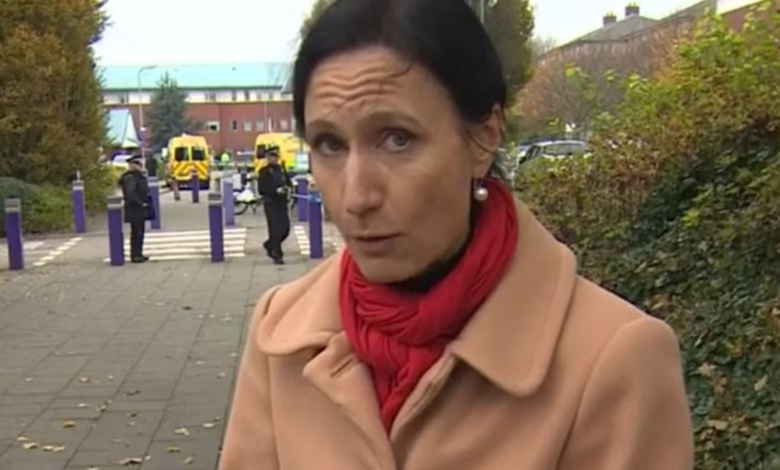
Currently, she operates as the BBC’s North of England Correspondent. That is a big title for a big job. It means she is responsible for covering breaking news, political shifts, and human interest features across a massive geographical region. She is the person the BBC turns to when a major story breaks in the North.
But here is what sets her apart. Fiona Trott isn’t just a talking head. She is a “Senior Broadcast Journalist,” which means she is likely producing, editing, and writing her own pieces. In the modern BBC, being a correspondent means wearing a lot of hats. You have to be fast, accurate, and creative all at once.
I find it fascinating that she has managed to stay relevant in an industry that changes every five years. She started in the late 1990s and is still pushing boundaries today. That speaks to a level of dedication that you don’t often see.
From EU Politics to the BBC Newsroom
Before she was chasing police tape and sitting in council meetings, Fiona Trott had a very different job. Her background is actually in European politics and public relations. This early experience gave her a unique “behind the scenes” view of how governments work.
According to her professional profile, Fiona worked as a press and public relations officer at the EU’s Committee of the Regions back in the mid 1990s. That is a fascinating starting point. Instead of starting in a small local paper, she started inside the bureaucratic heart of Europe.
She began this role in December 1996 and stayed until July 1997. It wasn’t a long stint, but it was crucial. Working for the EU teaches you how to handle complex policy, diplomatic language, and international pressure. These are skills that translate perfectly to national news.
Then, in a bold move, she pivoted completely. In November 1997, she joined the BBC. She left the structured world of press releases for the chaotic world of breaking news. That shift is not easy. It takes guts to leave a steady PR role to go into broadcast journalism, but it clearly paid off for her.
The Skills That Define Her Reporting
You might watch the news and think it looks easy. It isn’t. Being a correspondent requires a very specific toolkit. Fiona Trott has honed her skills over more than two decades. Let’s break down what makes her effective.
Master of Multiple Platforms
One of the hardest things about modern journalism is the “triple threat” requirement. You have to do TV, radio, and digital writing. Fiona excels at this. She navigates the fast paced world of broadcast journalism with ease.
She is skilled in video production and editing. This means she isn’t just the talent in front of the camera. She likely helps cut the clips, choose the soundbites, and build the narrative in the editing suite. That technical knowledge makes her a better storyteller.
The PR and Mediation Background
Here is something you might not expect. Fiona Trott has experience as a mediator at charity and business conferences. She also worked in public relations.
Why does this matter? Because it gives her an edge. Understanding PR means she knows when she is being spun. She can see through the corporate jargon and political tricks because she used to speak that language herself. It makes her reporting sharper and more skeptical, which is exactly what you want in a journalist.
Breaking News Agility
You have to be able to think on your feet. Fiona Trott has covered significant national and international events that demand instant reaction. When a story breaks, the correspondent has about ten seconds to figure out where to stand, what to say, and how to deliver it.
Her ability to synthesize complex information into accessible narratives is her superpower. You don’t want a lecture. You want the facts, fast. She turns legal documents and police statements into plain English that you can understand while you are eating breakfast.
Life as the North of England Correspondent
So, what does she actually do all day? As the BBC North of England Correspondent, her beat is incredibly wide.
She covers politics, but also human tragedy, weather events, and quirky local stories. She isn’t just sitting in a studio in Salford. She is likely in a van driving to a crime scene or a flooded town. The life of a regional correspondent is gritty.
Key aspects of her role include:
-
Investigative Reporting: Digging into local government issues.
-
Human Interest: Finding the emotional core in stories about ordinary people.
-
Live Shots: Standing outside courts or parliament to deliver live updates for the BBC News Channel.
-
Radio Packages: Recording reports for BBC Radio 5 Live and local radio stations.
It is a high pressure job. One minute you might be reporting on a ribbon cutting ceremony, and the next, you are reporting on a major tragedy. You have to be empathetic but also professional. Fiona Trott has managed to balance that tightrope for a very long time.

Why Trust Matters (And How She Earns It)
In today’s media landscape, trust is the most valuable currency. Sadly, it is also the rarest. Many people feel disconnected from the news. They feel like journalists are out of touch with their real lives.
Fiona Trott seems to avoid that trap. Because she focuses on the North of England, she is grounded in real communities. She isn’t flying in from London to tell people how to feel. She is part of their ecosystem.
Her background in public relations and mediation gives her a unique perspective on communication strategies. She understands that news is not just about transmitting facts. It is about resonance. It is about making the story matter to the person watching.
I think this is the most important part of her job. She has to maintain the BBC’s standards of impartiality while still connecting with the audience emotionally. It is a difficult line to walk. If you are too cold, you seem robotic. If you are too emotional, you seem biased. Fiona seems to have found the sweet spot.
Lessons for Aspiring Journalists
Are you looking to get into the news business? If so, the career path of Fiona Trott offers some clear lessons.
First, diversify your skills. Don’t just learn how to talk. Learn how to edit video, write a script for radio, and manage social media. Fiona is a “Senior Broadcast Journalist,” not just a “Presenter,” because she can produce.
Second, your weird experience matters. Fiona worked for the EU. That seems unrelated to local news, but it taught her how institutions work. That inside knowledge helps her navigate bureaucracy now. Your random job in an office or a shop teaches you how real people talk and think. Don’t discount it.
Third, stay put. Fiona has been with the BBC since 1997. In an era where people job hop every two years, she found a home and grew within it. Loyalty and longevity in one organization allowed her to build deep contacts and institutional knowledge.
Actionable tips for you:
-
Learn to use editing software like Adobe Premiere Pro or DaVinci Resolve.
-
Practice writing news scripts that are short and punchy.
-
Watch local news correspondents, not just national anchors. Watch how they interact with the public.
The Challenges of Modern Broadcast Journalism
We have talked a lot about the successes, but let’s be real for a moment. The job of a correspondent is harder now than it was twenty years ago.
Fiona Trott faces the same pressures as everyone else in the industry. Budgets are tighter. Newsrooms are smaller. You are expected to do the work of three people. There is also the 24 hour news cycle. When you break a story, you have to feed the beast immediately on social media, then write for the website, then go on air.
There is also the issue of public scrutiny. Every word she says on air is dissected by social media. One slip of the tongue can lead to a pile on. That takes a thick skin.
Despite these pressures, she continues to deliver high quality content that reflects the evolving needs of the media landscape. That phrase “evolving needs” is key. She isn’t stuck in the past. She adapts.
Conclusion
Fiona Trott is more than just a face on the television. She is a veteran operator who understands the mechanics of news from the inside out. She started in the bureaucratic halls of the European Union and moved to the chaotic newsrooms of the BBC.
She represents the best of regional journalism. She is grounded, skilled, and adaptable. In an age where we question where our information comes from, knowing the person behind the microphone helps.
Fiona Trott reminds us that good journalism is about people. It is about the person asking the questions and the people answering them. So, the next time you see her reporting from the North of England, you will know a little more about the hard work and history that went into those sixty seconds on screen.
Do you have a favorite news correspondent? I would love to hear who you trust for your daily news. Share this article with a friend who loves media analysis or BBC news.
Frequently Asked Questions (FAQs)
1. Who is Fiona Trott?
Fiona Trott is a Senior Broadcast Journalist and the BBC North of England Correspondent. She has worked for the BBC since November 1997, covering television, radio, and online news.
2. Where did Fiona Trott work before the BBC?
Before joining the BBC, Fiona worked as a press and public relations officer at the Committee of the Regions for the European Union. She held this role from December 1996 to July 1997.
3. What specific skills does Fiona Trott have?
She possesses a wide array of skills including breaking news reporting, video production, media relations, and editing (likely using ENPS systems). She also has a background in public relations and mediation.
4. Is Fiona Trott still working for the BBC?
Yes, as of 2024, Fiona Trott continues to work as the BBC North of England Correspondent. Her tenure at the BBC began in 1997 and remains active.
5. How is Fiona Trott different from Fiona Mangan?
It is easy to confuse the names. Fiona Trott is the BBC journalist discussed in this article. Fiona Mangan is an Irish professional cyclist who competes in the Tour de France Femmes.
6. Why is her background in PR important for journalism?
Understanding public relations helps a journalist spot a “spin” or a biased press release. Because Fiona worked in PR, she can anticipate how an organization might try to shape a story, allowing her to ask harder, more skeptical questions.
7. What is a Senior Broadcast Journalist?
A Senior Broadcast Journalist is a role that often involves more than just reporting. It typically includes producing content, making editorial decisions, mentoring junior staff, and managing complex live coverage. Fiona fills this senior role at the BBC.
8. What stories does Fiona Trott cover?
As the North of England Correspondent, she covers a wide range of stories. This includes major breaking news, political events, human interest features, and crisis reporting specific to the Northern regions of the UK.